In memory of Lawrence G. Brown, Professor Emeritus of Mathematics
10-22-2026
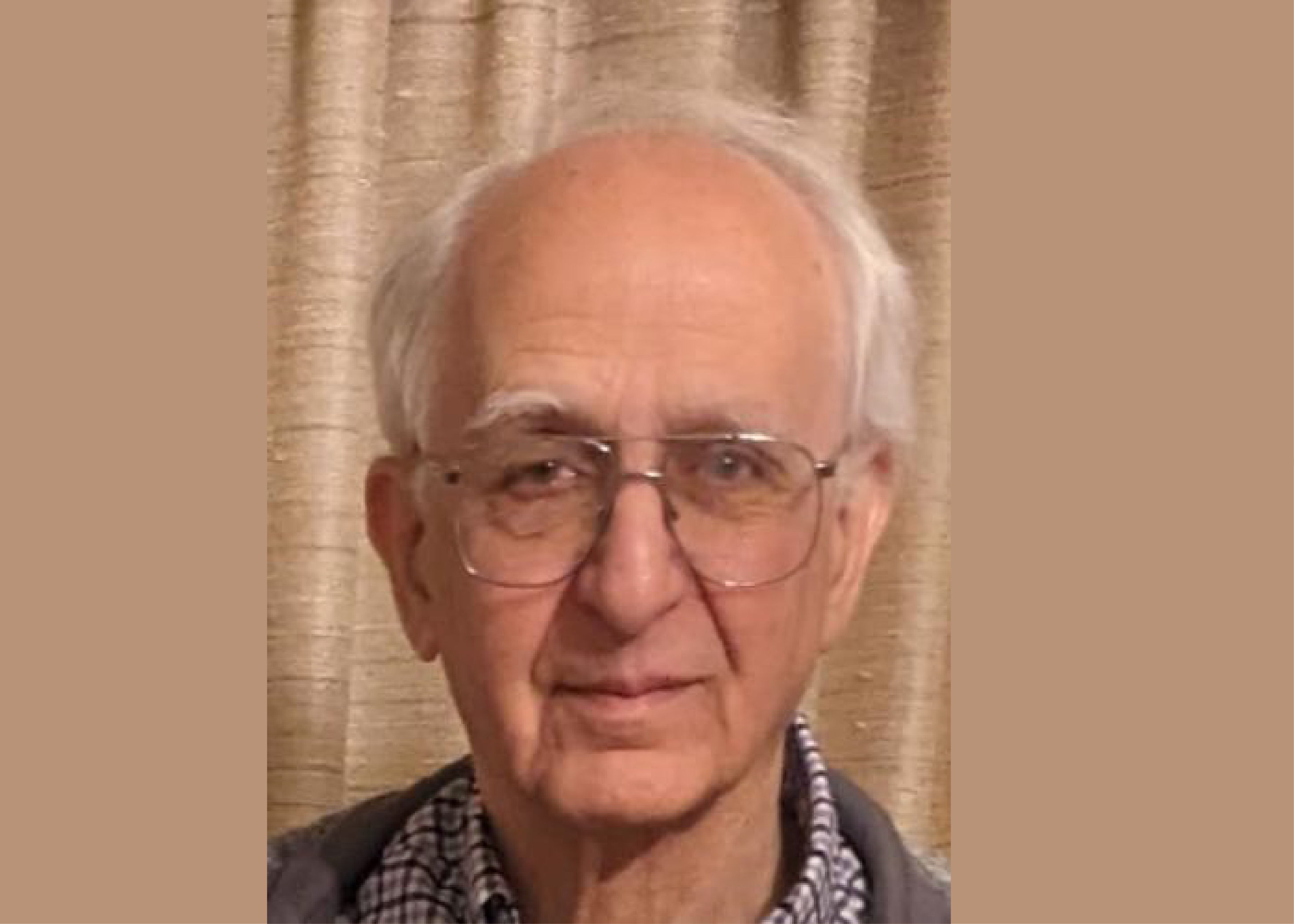
It is with deep sadness that the Department of Mathematics at Purdue University records the passing of Professor Emeritus Lawrence G. Brown- “Larry” to his friends and colleagues- on April 26, 2026. Professor Brown was a distinguished mathematician, a valued colleague, and a longstanding member of the Purdue community whose scholarly contributions and intellectual presence profoundly enriched the department and the broader field of mathematics.
Larry Brown was born on February 6, 1943. He received his undergraduate and graduate education at Harvard University, earning his Ph.D. in mathematics there in 1968 under the direction of George Mackey, one of the leading mathematical figures of the twentieth century. He then began a career that would establish him as an internationally respected authority in operator algebras and functional analysis. He was an assistant professor at Stanford from 1968-71 and an assistant professor at SUNY Stony Brook from 1971-74. He came to Purdue as an associate professor in 1974 and was promoted to full professor in 1977. During his 37 years at Purdue, Larry had sabbatical visits at UC Berkeley, University of Copenhagen in Denmark, the University of New Mexico, and the Mathematical Sciences Research Institute in Berkeley. He was the recipient of a Sloan Foundation Fellowship in
1975.
Professor Brown’s work helped shape modern operator algebra theory and influenced generations of researchers working in functional analysis, topology, and mathematical physics. He opened veins of research that are still vital today.
Among Larry’s most significant achievements was his breakthrough work, with Ronald Douglas and Peter Fillmore, on the theory now widely known as Brown–Douglas–Fillmore theory. This work introduced powerful new ideas connecting operator algebras with topology and was a key catalyst in the emergence of Noncommutative Geometry. The BDF theory was, in the words of Fields Medalist Alain Connes, “one of the very few in my mathematical trajectory that actually made me alter my route, since it gave me the key concept for my later work by exhibiting how purely operator theoretic constructions could make geometry emerge from the quantum.”
Larry also made deep contributions to the study of operator algebras, including the Brown measure, which describes eigenvalue distributions for arbitrary operators in tracial von Neumann algebras, and Brown’s Theorem on the stable isomorphism of hereditary subalgebras. The Brown measure remains a critical tool for analyzing the famous Invariant Subspace Problem relative to type II1 factors and plays an indispensable role in free probability.
Among the eight Ph.D. students he advised over the course of his career, several went on to distinguished faculty careers in their own right, including Huaxin Lin and Shuang Zhang. Professor Brown remained actively engaged in mathematical research long after his formal retirement, continuing to publish and participate in the intellectual life of the mathematical community.
As a colleague, Larry was as direct as he was generous, and with him, you always knew where you stood. And those who knew Larry well would know that you could not describe the man in full without noting his exceptional bridge play—the best of his mathematical contributions were perfect hands, every time.
Therefore, be it resolved that the Department of Mathematics at Purdue University expresses its profound appreciation for the life and contributions of Professor Lawrence G. Brown, and extends its deepest sympathies to his family, friends, colleagues, and former students.
Be it further resolved that this memorial resolution be entered into the permanent records of Purdue University in honor of Professor Brown’s distinguished life and service.
About the Mathematics Department at Purdue University
The Department of Mathematics is one of seven departments making up Purdue's College of Science. The Department has an international reputation as an outstanding center for mathematical research and education. Over 70 professors are actively involved in research in many areas of mathematics, including visiting scholars and through a vibrant graduate program. The Department offers Bachelor of Science, Master of Science and Doctor of Philosophy degrees. The department is located in the Math Building at 150 N. University Street in West Lafayette, Indiana. Learn more at math.purdue.edu.